

How to Choose the Right Chiller Van for Your Business
How to Choose the Right Chiller Van for Your Business
Choosing a chiller van looks simple from the outside — find a refrigerated vehicle, compare a price, book it. In practice, it is a decision with consequences that often do not surface until weeks later: an ADAFSA inspection asking for documentation a previous provider could not produce, or a twelve-stop Mussafah-to-Khalifa City route failing on its ninth delivery because the vehicle was never properly matched to the cargo it was carrying.
The wrong temperature range for your cargo is a compliance failure before the vehicle leaves the yard. The wrong capacity means either paying for unused space on every journey or overloading a vehicle in ways that compromise temperature consistency. The wrong provider — uncertified, with drivers who have never managed a multi-stop route through Abu Dhabi’s summer heat — introduces exactly the kind of risk that a correct decision at the outset would remove entirely.
This guide gives you a practical, step-by-step framework for choosing the right chiller van across every variable that matters: cargo type and temperature requirements, vehicle size, compliance and certification standards, multi-stop route performance, and how to evaluate a provider beyond the vehicle specification sheet.
At Abu Dhabi Refrigerated Transport (ADRT), we have been operating certified refrigerated transport from our Mussafah base for 15 years — chiller vans, chiller trucks, freezer vans, freezer trucks, refrigerated vans, refrigerated trucks, high roof vans, refrigerated cargo vans, and tail lift trucks. The guidance in this article reflects 15 years of operational experience serving food, pharmaceutical, hospitality, retail, and events clients across Abu Dhabi, Al Ain, Dubai, and the wider UAE.
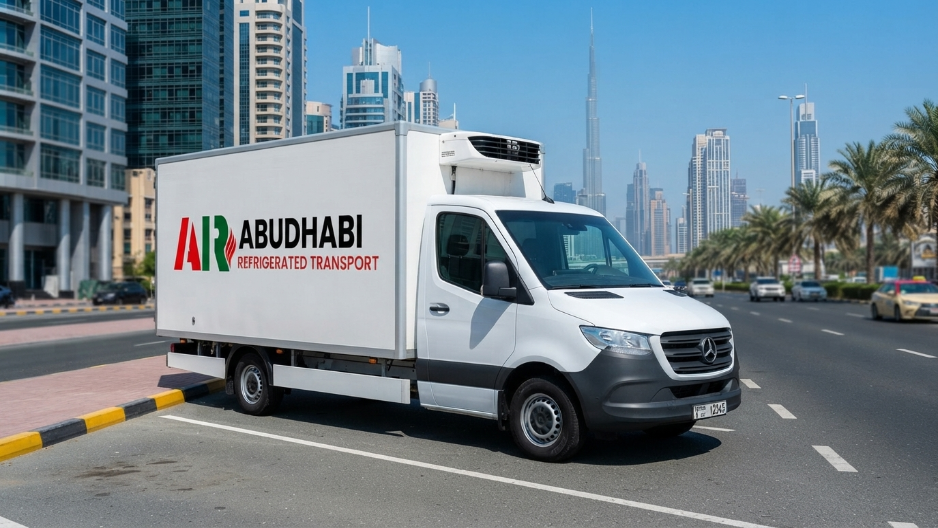
Step 1: Start With Your Cargo's Temperature Requirement
The most common mistake in chiller van selection is starting with the vehicle and working backward to whether it fits the cargo. The correct sequence runs the other way: define exactly what your cargo requires first, then select the vehicle that meets it.
Every temperature-sensitive product has a defined storage and transport range — the band within which it stays safe, sellable, and compliant. That range is the starting point for the entire decision. Price and provider come after this, not before it.
Cargo Categories and Their Correct Temperature Ranges
Fresh produce — fruits and vegetables: Most fresh produce travels well between +2°C and +8°C. Leafy greens, herbs, and salad vegetables perform best at +2°C to +4°C. Tropical fruits — mangoes, bananas, papayas — are cold-sensitive and need +10°C to +13°C; transporting them too cold causes chilling injury that degrades quality without obvious visible signs at delivery.
Dairy products — milk, yoghurt, cream, cheese: Standard dairy requires 0°C to +4°C. Soft cheeses and fresh cream are particularly sensitive — fluctuation above this range accelerates spoilage well before it becomes visually obvious. Consistent airflow throughout the cargo space matters as much as the set temperature for dairy multi-drop routes.
Fresh and chilled meat and poultry: Chilled (not frozen) meat requires 0°C to +4°C throughout transit. ADAFSA pays close attention to this category specifically — temperature documentation for chilled meat transport is increasingly a standard inspection checkpoint across Abu Dhabi’s distribution corridors, not just vehicle condition on the day.
Fresh seafood: 0°C to +2°C — the coldest practical range within standard chiller capability, and one of the most demanding categories for multi-stop routes. Vehicle hygiene between seafood deliveries matters as much as the temperature reading, particularly for businesses distributing from Abu Dhabi Port.
Standard pharmaceuticals: +2°C to +8°C, with GDP (Good Distribution Practice) compliance mandatory alongside standard food safety certification. Pharmaceutical chiller van transport carries the highest documentation requirement of any cargo category — ADRT has provided this service since our founding 15 years ago.
Fresh flowers and floral arrangements: +2°C to +5°C to prevent wilting, premature opening, or browning. Flower delivery is as time-critical as it is temperature-critical, particularly for Abu Dhabi’s events and hospitality sector.
Ready-to-eat meals and deli products: 0°C to +5°C — a strict compliance threshold with less margin for error than raw ingredient categories.
The key question to ask yourself: what is the lowest temperature requirement across everything in a typical load? That sets the target range for your chiller van. Anything warmer than that requirement stays safely within range; nothing should require colder conditions than what the vehicle is set to hold.
Step 2: Get the Vehicle Category Right — Chiller, Freezer, Refrigerated, or Specialised
This is the most consequential decision in the entire process, and one where ADRT’s broader fleet range gives Abu Dhabi businesses more precise options than a standard chiller-or-freezer choice alone.
A chiller van maintains 0°C to +8°C — above freezing, for cargo that needs to stay cold but must not freeze. A freezer van maintains -18°C to -22°C — sub-zero, for cargo that must remain solidly frozen throughout transit. A refrigerated van generally covers the same functional range as a chiller van. A high roof van addresses vertical clearance for tall or bulky cargo. A tail lift truck solves a different problem entirely — mechanical loading assistance at delivery points without dock facilities.
Vehicle Type | Temperature Range | Best For |
Chiller Van | 0°C to +8°C | Fresh produce, dairy, standard pharmaceuticals, flowers |
Freezer Van | -18°C to -22°C | Frozen meat, ice cream, frozen seafood |
Refrigerated Van | 0°C to +8°C | General temperature-controlled cargo |
High Roof Van | Chilled or ambient | Tall or oversized cargo |
Tail Lift Truck | Chilled or frozen | Heavy cargo at non-dock delivery points |
The critical rule: a chiller van cannot reach -18°C. Loading frozen cargo into one causes it to thaw in transit — a compliance failure and a complete cargo loss, not a minor inconvenience. ADRT’s fleet covers all five categories above specifically so Abu Dhabi businesses can match the vehicle precisely to their cargo and delivery environment, rather than forcing every requirement into a standard chiller van booking.
Step 3: Match Capacity to Your Actual Delivery Route
Once temperature is settled, capacity is the next decision — and getting this right affects both cost efficiency and how consistently your cargo holds temperature across a route.
1-Ton Chiller Van
Capacity: Up to 1,000 kg | Volume: Approximately 6 to 8 cubic metres
Best for: Restaurant and café supply routes across Abu Dhabi City, pharmacy runs, fresh flower deliveries to hotels and event venues, last-mile e-commerce grocery, small-to-medium catering deliveries.
The 1-ton chiller van is the most versatile vehicle for urban distribution across Abu Dhabi. It is compact enough for tighter delivery environments — hotel service corridors, restaurant back alleys — while carrying enough capacity for most routes covering five to fifteen stops.
Practical guidance: if your 1-ton vehicle is consistently loaded at 80% capacity or above, a 3-ton is likely more cost-efficient per kilogram delivered. If you are consistently running under 30% capacity, you are paying for space you are not using.
3-Ton Chiller Van
Capacity: Up to 3,000 kg | Volume: Approximately 14 to 18 cubic metres
Best for: Wholesale produce distribution, supermarket replenishment across Abu Dhabi and Al Ain, hotel and resort kitchen deliveries, large catering supply, higher-volume multi-drop routes.
When to Move to a Chiller Truck — or a Tail Lift Truck
For businesses operating at higher volumes — wholesale produce suppliers, large supermarket replenishment, industrial food distribution — a chiller truck (3-ton to 10-ton) is typically the better fit. ADRT’s fleet extends to this scale, covering Abu Dhabi, Al Ain, Dubai, and the wider UAE.
A distinct but related question: if your delivery locations do not have loading dock facilities — ground-floor restaurant entrances, hotel service corridors, retail back-of-store points — a tail lift truck solves a problem that capacity alone does not. The mechanical lift makes heavy frozen or chilled cargo deliveries practical at locations where manual unloading would otherwise be impractical or unsafe. This is a specific service ADRT offers that many standard chiller van providers do not.
Step 4: Confirm the Compliance Standard Your Cargo Requires
This is the step most businesses underestimate until an ADAFSA inspection or supplier compliance audit requests documentation a previous provider could not supply.
HACCP Certification — The Baseline for Food Transport in Abu Dhabi
HACCP — Hazard Analysis and Critical Control Points — is the internationally recognised food safety standard required for all temperature-controlled food transport. ADAFSA enforces this actively across Abu Dhabi’s Mussafah Industrial Area and major food distribution corridors. Certification covers the vehicle’s cargo compartment, refrigeration performance, hygiene standards, and temperature monitoring systems.
Request HACCP documentation from your provider before confirming any booking. ADRT holds full HACCP certification across our fleet — documentation is available on request, reflecting 15 years of maintaining this standard for ADAFSA compliance specifically.
GDP Compliance for Pharmaceutical Cargo
If your chiller van carries medicines, vaccines, or clinical samples, GDP compliance is mandatory alongside HACCP. This requires continuous temperature logging, chain-of-custody documentation, and trained drivers in pharmaceutical handling. ADRT has provided GDP-compliant cold chain transport in Abu Dhabi since our founding — the documentation systems and driver training reflect 15 years of pharmaceutical cold chain experience specifically in this market.
Why Temperature Records Matter Beyond Regulation
Beyond pure regulatory compliance, temperature monitoring records have become a practical commercial requirement. Supermarket procurement teams, hotel purchasing departments, and pharmaceutical clients across Abu Dhabi increasingly request temperature logs as part of ongoing supplier performance review — not just at onboarding. A provider who cannot supply this data on request is a liability to your most valuable commercial relationships.
Step 5: Plan for Multi-Stop Route Performance in Abu Dhabi's Heat
Most chiller van bookings are not single-destination deliveries — they are multi-stop routes across Abu Dhabi City, Mussafah, Khalifa City, or out to Al Ain, and a vehicle that holds temperature perfectly on the first delivery can fail by the eighth stop on a July afternoon if the refrigeration system is undersized, the driver mismanages door-open time, or the vehicle was not pre-cooled before loading.
Recovery Time After Door Openings
Every time a chiller van door opens at a stop, internal temperature rises. A well-maintained vehicle recovers within two to four minutes of the door closing. A poorly maintained or undersized refrigeration unit can take ten to fifteen minutes — or may never fully recover before the next stop.
On a twelve-stop route, ten-minute recovery times after every stop add up to nearly two hours spent outside the target range across the day. For fresh seafood, soft dairy, and ready-to-eat meals, that sustained elevation has real, visible consequences. ADRT has built our 15-year maintenance schedule specifically around this recovery performance standard, because Abu Dhabi’s summer ambient temperatures apply maximum thermal stress on refrigeration systems.
Loading Sequence
Load the last delivery first, and the first delivery last — so the next stop’s cargo is always accessible without disturbing the rest of the load. This single habit minimises door-open time at every stop, which directly reduces the cumulative recovery burden on the refrigeration system across a long route.
Early Dispatch for the Abu Dhabi to Al Ain Corridor
Abu Dhabi’s ambient temperature follows a predictable daily curve — coolest in early morning, peaking in early afternoon. For routes extending out to Al Ain, where summer ambient temperatures apply particularly intense thermal stress, scheduling dispatch before the afternoon peak meaningfully reduces the load on the refrigeration system across the full route length.
Step 6: Evaluate the Provider — Not Just the Vehicle
A chiller van is one part of a working cold chain. The provider’s maintenance standards, driver experience, fleet range, and 15 years of operational track record make up the rest. Here is what to check before committing to a booking.
HACCP documentation, available on request before booking — not promised “afterward.” ADRT provides this upfront, every time.
Refrigeration brand confirmed — Carrier and ThermoKing are the UAE industry standard, engineered specifically for extreme ambient heat performance.
Drivers trained in cold chain protocols specific to your cargo and delivery environment — whether that is a five-star hotel receiving bay, a supermarket loading dock, or a ground-floor restaurant entrance requiring tail lift assistance.
Fleet range that covers your full requirement — from 1-ton chiller vans to tail lift trucks and refrigerated cargo vans, so you are not forced to use a separate provider as your needs shift between cargo types and delivery environments.
A track record specific to Abu Dhabi conditions — 15 years of operating in Abu Dhabi’s specific climate, regulatory environment (ADAFSA), and delivery infrastructure means ADRT’s maintenance schedules, route knowledge, and compliance documentation reflect this market specifically, not a generic UAE operation.
Chiller Van Selection by Business Type: Quick Reference
Fresh produce distributor, Abu Dhabi City restaurant routes: 1-ton chiller van, 0°C to +4°C, daily or weekly rental. Correct loading sequence matters on multi-stop routes.
Dairy supplier, supermarket replenishment across Abu Dhabi and Al Ain: 3-ton chiller van, 0°C to +4°C, weekly or monthly rental. Temperature documentation for supermarket compliance.
Pharmaceutical distributor: 1-ton chiller van or refrigerated cargo van with GDP documentation, +2°C to +8°C, continuous data logging, signed proof of delivery.
Hotel and resort catering, Abu Dhabi luxury hospitality sector: 1-ton to 3-ton chiller van, 0°C to +5°C, early morning dispatch, tail lift truck where hotel service entrances require mechanical unloading.
Florist, hotel and event venue deliveries: 1-ton chiller van, +2°C to +5°C, time-critical dispatch.
Ice cream distributor: 1-ton or 3-ton freezer van (not a chiller van), -18°C to -22°C, rapid recovery after door openings as the primary selection criterion — maintenance-critical given Abu Dhabi summer heat.
Restaurant or retail delivery without dock access: Tail lift truck with temperature control, mechanical loading assistance for ground-floor or non-dock delivery points.
Bulky or tall chilled cargo: High roof van — contact ADRT to confirm temperature capability and specifications.
ADRT Chiller Van Pricing: 2025 Rates
Vehicle | Capacity | Daily Rate | Weekly Rate | Monthly Rate |
1-Ton Chiller Van | Up to 1,000 kg | AED 250 | AED 1,663 | AED 6,750 |
3-Ton Chiller Van | Up to 3,000 kg | AED 350 | AED 2,328 | AED 9,450 |
1-Ton Freezer Van | Up to 1,000 kg | AED 280 | AED 1,862 | AED 7,560 |
Refrigerated Van | Up to 1,500 kg | AED 300 | AED 1,995 | AED 8,100 |
High Roof Van | Up to 1,200 kg | AED 270 | AED 1,795 | AED 7,290 |
Chiller Truck (3–5 Ton) | Up to 5,000 kg | AED 420 | AED 2,793 | AED 11,340 |
Tail Lift Truck | Up to 5,000 kg | AED 450 | AED 2,993 | AED 12,150 |
All rates include the vehicle and driver. Fuel and any cross-emirate tolls itemised separately in your written quote. No hidden charges.
Frequently Asked Questions
What is the difference between a chiller van and a refrigerated van?
Functionally, both maintain 0°C to +8°C and are often used interchangeably in the UAE market. What matters is the documented temperature range and the condition of the vehicle’s refrigeration system. ADRT offers both — contact us to confirm which fits your specific cargo and route.
When do I need a tail lift truck instead of a standard chiller van?
If your delivery locations do not have loading dock facilities — ground-floor restaurant entrances, hotel service corridors, retail back-of-store points — a tail lift truck provides the mechanical loading assistance that makes heavy chilled or frozen cargo delivery practical and safe at these locations.
Can a chiller van handle frozen cargo?
No. A chiller van cannot maintain -18°C. Frozen cargo loaded into a chiller van will begin to thaw during transit — you need a dedicated freezer van for sub-zero requirements.
What is the minimum rental period?
No minimum. Single-day chiller van hire starts at AED 250/day, driver included. Contact ADRT to discuss weekly or monthly contract rates for regular routes.
Is HACCP documentation available for ADAFSA audits?
Yes. Full HACCP certification documentation is available on request and can be provided ahead of ADAFSA inspections, supplier compliance audits, and commercial buyer onboarding requirements.
Do you cover Al Ain as well as Abu Dhabi City?
Yes. ADRT provides regular service coverage to Al Ain, as well as Dubai and the wider UAE, from our Mussafah base.
How quickly can ADRT dispatch a chiller van?
Same-day dispatch is available from our Mussafah base. We operate 24/7 — call or WhatsApp +971 508050737 for the fastest response.
The Summary: Choosing the Right Chiller Van
Five decisions, in the right order: establish your cargo’s exact temperature requirement first — this determines whether you need a chiller van, freezer van, refrigerated van, or a specialised vehicle like a high roof van or tail lift truck. Size the vehicle to your actual route and volume — 1-ton for urban routes, 3-ton for wholesale, scaling up for industrial-scale distribution. Confirm the compliance standard your cargo and your buyers require — HACCP as the floor, GDP for pharmaceutical cargo. Account for multi-stop route realities specific to Abu Dhabi’s heat — recovery time, loading sequence, and dispatch timing across the Mussafah-to-Al Ain corridor all genuinely affect whether your cargo arrives correctly. And choose a provider on the evidence that protects your cargo — certified fleet, the right refrigeration brand, drivers trained for your specific delivery environment, and 15 years of Abu Dhabi-specific operational experience.
ADRT has built our fleet, our maintenance schedules, and our driver training around exactly this standard for 15 years.
Book Your Chiller Van Today
HACCP-certified chiller van and refrigerated transport across Abu Dhabi, Al Ain, Dubai, and all UAE emirates.
Call or WhatsApp: +971 508050737
Email: mushtaqahmadzaii0@gmail.com
Address: M_17, Industrial Area, Mussafah, Abu Dhabi, UAE
Website: abudhabirefrigeratedtransport.com
Written quote before any booking. Driver always included. GPS-tracked, HACCP-certified fleet. 15 years of Abu Dhabi cold chain experience.